South Africa Open Africa Cup of Nations Campaign with Confident Win Over Kenya

South Africa Open Africa Cup of Nations Campaign with Confident Win Over Kenya

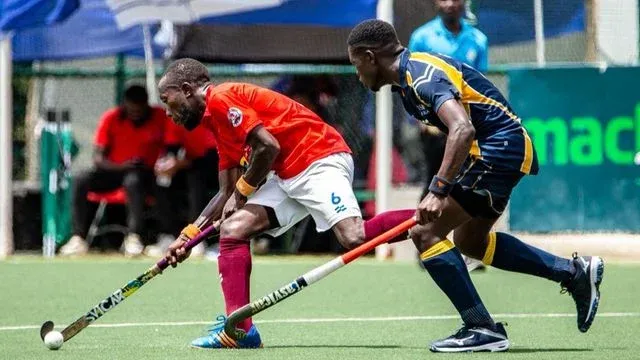
South Africa’s men’s hockey team began their Africa Cup of Nations title defence with a 3–1 victory over Kenya in Ismailia, Egypt, on Sunday afternoon. The opening day of action had seen the South Africans awarded a 5–0 walkover when Zambia failed to honour their fixture on Saturday, but Sunday’s clash against Kenya provided the first real test on the field for the defending champions. There was added significance to the occasion as Cullin de Jager, Ryan Mann, Ayakha Mthalane and Niel Raath were all handed their senior international debuts in the green and gold. After a cagey first quarter, the breakthrough came midway through the second period. Captain Dayaan Cassiem linked brilliantly with his brother Mustapha, who fired a pinpoint pass across goal for Keenan Horne to finish superbly on the reverse stick, a goal that showcased South Africa’s trademark attacking flair. The lead was doubled shortly after through a penalty corner as Mustapha Cassiem took charge and rifled home a drag flick to make it 2–0 at the halftime break. Kenya, to their credit, fought back in the third quarter and found a lifeline when Bethuel Masambu capitalised on a scrappy penalty corner, pulling one back despite South Africa’s control of possession and territory. Any hopes of a Kenyan comeback were, however, quickly extinguished when Calvin Davis converted from another penalty corner with a low and hard finish to restore the two-goal cushion and seal a 3–1 win for the South Africans. The defending champions will now turn their attention to a mouth-watering clash against hosts Egypt on Tuesday, a fixture that never fails to deliver intensity, passion, and plenty of drama. Source: SAhockey.co.za | Oct 12, 2025

South African Hockey Sets Sights on Continental Glory at 2025 Africa Cup of Nations

South African Hockey Sets Sights on Continental Glory at 2025 Africa Cup of Nations

South African Hockey is pleased to announce its dual ambitions as both the men’s and women’s national teams prepare to compete at the 12th Men’s and 9th Women’s Africa Cup of Nations (ACN) in Ismailia, Egypt. The tournament, running from 11 to 18 October 2025, doubles as the African qualifying event for the 2026 FIH Hockey World Cup, with the champions in each gender earning direct qualification. South African Men: Title, Pride, and World Cup Ambition The men’s squad arrives in Egypt with both experience and expectation. South Africa is among the top-ranked African teams and has historically dominated the continental scene, with eight ACN titles to their name. Key Facts & Format Six teams will contest the men’s tournament: South Africa, Egypt (host), Nigeria, Kenya, Ghana, and Zambia. The format is round-robin, where every team plays each other from 11 to 17 October. The top two teams after this phase will contest the final on 18 October; the third and fourth placed teams will battle for bronze. The men’s champion earns Africa’s automatic slot for the 2026 Men’s FIH Hockey World Cup. Strengths, Challenges & Outlook South Africa’s depth, international experience, and consistency in continental play position them as one of the front-runners. Their challenge will be managing pressure as favourites and countering host-nation advantage, especially from Egypt. Should they maintain composure and tactical discipline, they have a strong shot at the title and World Cup qualification. South African Women: Aiming for Continued Continental Dominance The women’s side enters the tournament as defending champions, having won the last seven consecutive editions. Their aim in 2025 is clear: extend that streak to eight and secure Africa’s sole berth in the 2026 Women’s FIH Hockey World Cup. Team & Format Five nations will compete in the women’s tournament: South Africa, Egypt, Nigeria, Kenya, and Ghana. The format mirrors the men’s: round-robin from 11 to 17 October, followed by medal matches on 18 October. The women’s champion earns the direct World Cup spot. Squad Highlights & Momentum The women’s squad was officially announced in August 2025. It features a blend of seasoned campaigners and emerging talent. Notably, three players—Ane’ Janse van Vuuren, Caylin Maree, and Jeanri Thomas—will earn their first caps at the international level. Nine members of the Paris 2024 Olympic side have been retained, providing continuity at the top end. Critical Dates & Matchups 11 October (Opening Day): The men kick off with Ghana vs Kenya, followed by South Africa vs Zambia. In the women’s tournament, Kenya face Nigeria and Ghana take on Egypt. 18 October (Finals Day): Gold and bronze medal matches will take place across both tournaments. Media & Broadcast Information All matches will be streamed live on the African Hockey Federation Youtube channel. Source: SAhockey.co.za

Kenya set for tough start as hockey Africa Cup of Nations kicks off in Ismailia

Kenya set for tough start as hockey Africa Cup of Nations kicks off in Ismailia

The women’s side will open their quest for glory at 1:00 PM EAT, while the men will step onto the pitch later at 9:30 PM.  The 2025 Hockey Africa Cup of Nations kicks off today in Ismailia, Egypt, with both Kenya men’s and women’s national teams set to begin their campaigns. The women’s side will open their quest for glory at 1:00 PM East African Time, while the men will step onto the pitch later at 9:30 PM in a high-stakes opener against hosts Egypt. In other opening fixtures, the men’s category will feature Ghana facing Nigeria at 11:00 AM and South Africa meeting Zambia at 3:00 PM, while the women’s fixtures will see Ghana take on Egypt at 5:00 PM. For Kenya, this tournament represents both a continuation of progress and a test of resilience. The men’s national team, coached by Michael Malungu, will be aiming to improve on their fourth-place finish in the 2022 edition, where they narrowly lost 4–2 to Nigeria in the third-place playoff. The Kenyan squad features a blend of experienced players and exciting new talents — including Vincent Wesonga, Mathias Gularire, Brian Azeze and Linton Nayombe, who earned their first senior call-up after representing Kenya at the U21 Africa qualifiers in Namibia earlier this year. The women’s team, on the other hand, will look to replicate or even better their bronze medal finish from 2022, when they edged Zimbabwe 3–1 in post-match shootouts. Both sides have had a busy few months of preparation — a process that Malungu says has been both challenging and rewarding. “The preparations have been good so far, the boys are ready for the task ahead,” said Malungu ahead of the team’s departure. “Hockey, unlike other sports, is more of an amateur sport here in Kenya, so we don’t have the privilege of having the best of preparations. But we’ve made the most of what we have.” As the tournament begins, both Kenyan teams know the magnitude of the task ahead — facing Africa’s hockey giants such as South Africa, Egypt, and Ghana. For the women, early momentum will be crucial as they navigate a demanding fixture list, while the men’s side will have to contend with the home advantage Egypt will enjoy in the late-night opener. Day 1 fixtures: Men: Ghana vs Nigeria – 11am South Africa vs Zambia – 3pm Kenya vs Egypt – 9.30pm Women: Kenya vs Nigeria – 1pm Ghana vs Egypt – 5pm Source: Mozzartsport.co.ke | 11 Oct. 2025

First-ever FIH ParaHockey World Cup to take place in 2026

First-ever FIH ParaHockey World Cup to take place in 2026

08 Oct, 2025 In addition to the FIH Hockey World Cup Belgium & Netherlands 2026, a historical milestone will happen at the same time and in the same host-countries: the first ever FIH ParaHockey World Cup! Announcing the news at a press conference in Brussels recently, FIH President Tayyab Ikram said: “I’m so happy that we’ve decided to create the first ever FIH ParaHockey World Cup, which will be played alongside the 2026 World Cup, also in Belgium and the Netherlands. This is a great milestone. For us, diversity and inclusion are key principles that we’re including in everything we do. ParaHockey is a steadily growing format in our sport globally, which we’re very proud of. I already invite all hockey fans to come and support ParaHockey athletes for this historic event, that will be repeated in the future as well.” The 2026 FIH ParaHockey World Cup will be a 6-a-side tournament played at HC Myra in Amstelveen, Netherlands, and Louvain-La-Neuve HC, in Belgium, from 21 to 25 August 2026. The finals will be held in the same arenas as those hosting the FIH Hockey World Cup, namely the Wagener Stadium in Amstelveen and the Belfius Hockey Arena in Wavre. The 16 participating teams will be announced soon. ParaHockey for athletes with intellectual disabilities (ID) is a hockey format that has been established 14 years ago. True to its values of diversity and inclusion applied in all its policies and activities, the International Hockey Federation (FIH) has been supporting ParaHockey for many years. And the sport keeps growing! In the last survey organised by FIH to count the number of hockey participants worldwide, more than 30 National Associations indicated that they had launched ParaHockey in their country. As a further sign of inclusion, ParaHockey involves mixed gender teams. In 2023, ParaHockey was introduced for the first time as a demonstration sport at the Special Olympics World Summer Games in Berlin, with 12 countries taking part. By creating this World Cup now, FIH is giving ParaHockey an unprecedented impulse that shall boost its growth like never before. As a major illustration of that, this World Cup should pave the way for hockey to make its debut as a recognised sport of the Special Olympics World Summer Games, starting with the 2027 edition in the City of Santiago, Chile. #ParaHockey Source: FIH.hockey

WADA publishes 2026 Prohibited List

WADA publishes 2026 Prohibited List

08 Oct, 2025 Today, the World Anti-Doping Agency (WADA) publishes the 2026 List of Prohibited Substances and Methods (List), which was approved by WADA’s Executive Committee (ExCo) during its meeting on 11 September 2025 and enters into force on 1 January 2026. We also publish: the 2026 Summary of Major Modifications and Explanatory Notes as compared to the 2025 List; and the 2026 Monitoring Program, which includes substances that are not on the List, but that WADA wishes to monitor in order to detect potential patterns of misuse in sport. The List is one of the eight International Standards that are mandatory for all Signatories of the World Anti-Doping Code (Code). It designates which substances and methods are prohibited both in- and out-of-competition and which substances are banned in particular sports. WADA Director General Olivier Niggli said: “We encourage athletes, their entourage and all stakeholders to acquaint themselves with the Summary of Major Modifications to avoid inadvertent use of substances and methods that are prohibited in sport for 2026. In particular, we kindly ask all Anti-Doping Organizations around the world to share the List and its related documents with athletes, their entourage, and other relevant stakeholders under their jurisdiction. Major modifications for 2026 As outlined in the 2026 Summary of Major Modifications and Explanatory Notes, the major modifications for 2026 include the following: Further examples or clarifications have been added to the following substance classes to help athletes and their entourage better identify prohibited substances: S1. Anabolic agents, S2. Peptide hormones, growth factors, related substances, and mimetics, S4. Hormone and metabolic modulators, and S6. Stimulants. The dosing intervals of salmeterol have been changed to avoid potential ergogenic effects, though the maximum daily delivered dose remains the same. More details have been given about the prohibition of withdrawal of blood and blood components. The non-diagnostic use of carbon monoxide (CO) has been added to the Prohibited Methods as a new section, M1.4. The use of carbon monoxide for diagnostic purposes, such as total hemoglobin mass measurements or the determination of pulmonary diffusion capacity, is not prohibited. Cell components (e.g., nuclei and organelles such as mitochondria and ribosomes) have been added to the existing prohibition of using normal or genetically modified cells. It has been clarified in the Glucocorticoids Washout Table that use of sustained-release formulations may result in detectable glucocorticoid levels past the washout period due to prolonged systemic absorption. Annual list review process WADA leads an annual revision process concerning the List, beginning with an initial meeting in January and concluding with the publication of the List by 1 October. This is an extensive consultation process that includes WADA’s List Expert Advisory Group gathering information including the latest scientific and medical research, trends, and intelligence gathered from law enforcement and pharmaceutical companies; circulating a draft List among stakeholders; and, taking their submissions into consideration to revise the draft, followed by review by the Agency’s Health, Medical and Research (HMR) Committee. The HMR Committee then makes its recommendations to WADA’s ExCo, which approves the List during its September meeting. For a substance or method to be added to the List, it must be determined that it meets at least two of the following three criteria: It has the potential to enhance or enhances sport performance It represents an actual or potential health risk to the athletes It violates the spirit of sport The List is released three months ahead of it taking effect so that athletes, their entourage, and other stakeholders can acquaint themselves with any modifications. Ultimately, athletes are responsible for prohibited substances found in their body and prohibited methods found to have been used. Members of an athlete’s entourage are also liable for Anti-Doping Rule Violations if determined to be complicit. Consequently, if there is any doubt as to the status of a substance or method, it is important that they contact their respective Anti-Doping Organizations (International Federation or National Anti-Doping Organization) for advice. The Therapeutic Use Exemption Program It should be noted that athletes who have a legitimate medical reason for using a prohibited substance or method that is on the List can apply for a Therapeutic Use Exemption (TUE) to determine whether they meet the criteria outlined in the International Standard for Therapeutic Use Exemptions (ISTUE). The TUE Program is a rigorous and necessary part of elite sport and has overwhelming acceptance from athletes, physicians, and anti-doping stakeholders. Educational resources  In addition to the documents linked above, WADA has provided, or will provide, educational resources as part of its Code Implementation Support Program (CISP), which can be accessed on the Agency’s Anti-Doping Education and Learning Platform (ADEL). These resources include: A CISP Checklist – Implementing Revised List (available now) Athlete and ASP Guide to the 2026 List (to be available mid-December) Languages and formats The 2026 Prohibited List, the 2026 Summary of Modifications and Explanatory Notes, and the 2026 Monitoring Program are available for download on WADA’s website in English and French, with Spanish to follow in the coming weeks. Stakeholders wishing to translate the List into other languages are kindly asked to signal their interest to code@wada-ama.org. WADA will then provide the necessary files and, once the translation is finalized, will make the translated List available on the Agency’s website. The List’s mobile-friendly digital edition will go live on 1 January 2026. Source: FIH.hockey