Emma Terho reflects on an exciting 2025 for athletes

Emma Terho reflects on an exciting 2025 for athletes

05 Jan, 2026 As she prepares for her last event in her current role at Milano Cortina 2026, Emma Terho looks back on her final year as IOC Athletes’ Commission Chair, including the election of a new IOC President and the latest edition of the International Athletes’ Forum. Dear athletes, As we head towards a new year and attention turns to Milano Cortina 2026, I look ahead with great excitement for what’s to come – even though my tenure as IOC AC Chair is coming to an end. With President Kirsty Coventry leading the IOC into a new era, I can’t wait to see how the Olympic Movement advances – particularly for you, the athletes – under her leadership. For now, though, I want to reflect on the last 12 months, which have brought some exciting developments. A new direction The election of President Coventry in March was significant for many reasons. First, she created history by becoming the first woman and the first African to lead the IOC. Second, not only is Kirsty a former athlete and a two-time Olympic gold medallist, she is also an experienced athlete representative, having been a member of our Commission from 2013 to 2021 and Chair for the final three of those years. As someone who lived the life of a top-level athlete before going on to make such an impact for her fellow athletes off the field of play, President Coventry is an outstanding person to take the Olympic Movement forward. Her desire to ensure the athletes’ voice is heard has already been shown through the “Fit for the Future” consultation, which many of you will have taken part in. Your feedback will prove vital for President Coventry as she unveils the latest strategic roadmap for the IOC in 2026. Our support for you In addition to ensuring a positive athlete experience during the Olympic Games, one of my main goals as Chair has been to ensure we are providing the support you need off the field of play. I am happy that, in 2025, we have been able to advance in this area: The Athlete365 community continues to grow, now with more than 205,000 Olympians, elite athletes and entourage members around the world 51 athletes took part in the Broadcast Training Programme and Olympic Commentary Training with Olympic Broadcasting Services, with many set to take up paid positions at Milano Cortina 2026 29 Athlete365 Career+ workshops were delivered and 19 new educators were trained to ensure we are providing this support in a range of countries and languages The Athlete365 Business Accelerator reached nearly 1,000 athletes worldwide, with 50 selected to receive one-to-one mentorship Eight more athletes received full IOC scholarships to take part in two Innovation in Action programmes at IMD Business School We launched three new Athlete365 Learning courses: Start your e-commerce journey with Alibaba.com and Power Up Your Future Stronger together In June, the 12th edition of the International Athletes’ Forum (IAF) demonstrated the growing strength of our global network as we welcomed more than 400 athlete representatives to Lausanne. During two days of panel discussions, workshops and networking opportunities, we announced that there are now 200 National Olympic Committees with their own athletes’ commissions – an incredible milestone. My personal highlights were the many discussions with athlete representatives from all over the world, as well as my fireside chat with President Coventry – who reflected on her extraordinary journey from being a young girl inspired by the Olympic Games to becoming IOC President – and an emotional final Q&A session with now-Honorary President Thomas Bach. We also had a surprise appearance from tennis legend Rafael Nadal, updates on athlete support and the athlete experience at upcoming Olympic Games, and six expert-led parallel sessions on important topics like anti-doping, mental health and sustainability. Meeting so many passionate athlete representatives from all over the globe always makes these forums so special, and the 2025 edition will live long in the memory for me. End of an era The IOC AC has been a massive part of my life for the last eight years, and even more so since 2021, when I was elected Chair. I’m immensely proud of our group and the work we’ve done together, from refining and improving the athlete experience at the Olympic Games to growing the network of athlete representatives and expanding our support for you. A particularly special moment for me was Paris 2024, where athlete-driven initiatives such as the Mind Zone, the Champions Park medal reallocations and the family space were tangible evidence of the impact that we can have. I also want to take this opportunity to thank all the athletes I have had the pleasure of meeting as part of this role, and every single athlete representative around the world for all the work you do – your work is very meaningful for the future of sport, and you’ve made my time as IOC AC Chair a real joy and privilege. A busy finale My work in this role isn’t quite done yet, however, with a busy January in store as we make the final preparations for Milano Cortina 2026. Together with our Vice-Chairs, we have been working to ensure a smooth transition for the next leadership of our Commission, which I have no doubt will be great. As Abhinav, Astrid, Hong and I prepare to step down from our roles on the IOC AC, please be sure to familiarise yourself with the 11 candidates and vote in the election. After the results are announced on 19 February, the Commission will then elect a new Chair. For those of you gearing up to compete, don’t miss our Get Ready Pack, designed specifically to ensure you have the best experience possible at the Games. As always, keep an eye on Athlete365 for the latest news before, during and after the Games, including some inspiring stories from your fellow athletes who are making their mark on Olympic history in Italy. Lastly, and

Continue Reading →

Five inspiring Olympians named IOC Climate Action Awards 2025 finalists

Five inspiring Olympians named IOC Climate Action Awards 2025 finalists

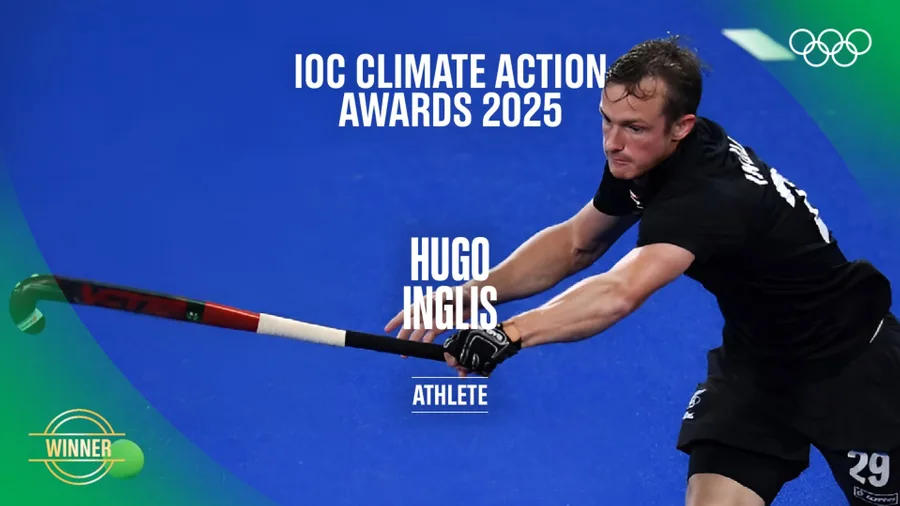
05 Jan, 2026 Five Olympians have been selected as finalists for the IOC Climate Action Awards 2025. Here, we meet each athlete and hear their story. Every year, the IOC Climate Action Awards shine a spotlight on initiatives that make a real difference to the climate impact of sport. The athlete category for 2025 is made up of five Olympians, with each of them going above and beyond to tackle this important worldwide issue. Rhydian Cowley Rhydian, who won bronze for Australia in the marathon race walk mixed relay at Paris 2024, became involved in climate action after a personal experience at home. “Bushfires back in 2019 and 2020 forced the relocation of a training camp and covered my home city in thick smoke for a month. “It really hit me hard and showed that I couldn’t wait for others to fix the problem.” Now, Rhydian helps national sports organisations, including Athletics Australia, develop climate action plans. “Athletes get an incredible platform to communicate with people across all demographics, so we have an opportunity to make climate action much more tangible around the world. “A safe, sustainable future for sport won’t happen without athletes being a part of creating it.” Hugo Inglis A four-time Olympian in hockey for New Zealand, Hugo co-founded High Impact Athletes with IOC Athletes’ Commission member Marcus Daniell, connecting athletes with the most impactful charities in climate change and other areas. “Growing up in New Zealand meant spending most of my time outside, and later I played in brutally hot conditions in countries that are already feeling climate impacts. Climate change stopped being an abstract issue and started to be something I wanted to play my part in. “Athletes sit in a powerful place: kids listen to us, brands invest in us and sport cuts across borders and politics. “It’s important for all of us to be part of creating a better future – not just on climate, but on mental health, inequality and conflict as well.” Oliver Scholfield Alongside representing Canada in hockey at Tokyo 2020, Oliver co-founded Racing to Zero, a consultancy that helps sports organisations understand and reduce their carbon impact. “I’ve been interested in environmental sustainability and conservation since I was young, but it wasn’t until 2019, when I found a group of fellow Canadian Olympians who were also interested in this field, that we started to take meaningful action. “This award comes at a time when more and more people are experiencing the impacts of climate change. “In sport, we’re already seeing changes to training schedules and competition formats to accommodate worsening conditions, so we need to step up to ensure future generations can continue to play like we do now.” Gabrielle Smith Gabrielle rowed for Canada at Tokyo 2020 while balancing her career in science and her climate project, “Rising Tides”, which aims to improve water quality and clean waterways in Canada. “My career as a scientist has given me a deep appreciation for how interconnected our global water systems are. “At the same time, I’ve trained on lakes, rivers and coastlines around the world, and those hours spent on the water have shaped my perspective just as much as my time in the field. “Water pollution was something I could see every day at practice. Those experiences opened my eyes to sustainability in sport and pushed me to protect the waterways that make rowing possible.” Kevin Wekesa Kevin played rugby sevens for Kenya at Paris 2024 and is now helping to promote sustainability back home through “Play Green”. The initiative provides aluminium bottles to national teams – saving the use of nearly 1,000 plastic bottles per week – and provides nature restoration projects, mentorship and workshops in schools. “I believe athletes have a unique responsibility in shaping a more sustainable future. When athletes take climate action seriously, it sends a powerful message: that protecting the environment is something every individual can contribute to. “Sport teaches us teamwork and discipline, and these values are exactly what the world needs in the fight against climate change. If athletes step forward, we can inspire millions. And that’s how change truly begins.” This story was originally published on Olympics.com Source: FIH.hockey

FIH World Rankings: how 2025 shook things up

FIH World Rankings: how 2025 shook things up

23 Dec, 2025 International hockey in 2025 delivered a relentless calendar of top-flight action — from the FIH Hockey Pro League battles to Nations Cup and Nations Cup 2 drama along with Continental Championships across all continents — sparking notable shifts in the FIH World Rankings. Across both the men’s and women’s game, familiar powers consolidated their positions while emerging teams made meaningful gains. In the women’s rankings, Netherlands (3809) who started the year in the top spot, maintained their stranglehold throughout the year, with another stellar season where they added more trophies to their cabinet with championship runs at the Pro League and the EuroHockey Championships, while Argentina (3326), Belgium (3109) and China (2977) with great continental championship and Pro League campaigns continue in the second, third and fourth places respectively, where they started the year. Spain (2777) are amongst the biggest gainers of the year among the top-10 rankings, as they find themselves in the fifth spot, having started the year in eighth! Spain’s climb comes at the expense of Australia (2758), Germany (2734) and England (2510) who have all dropped one place from where they started the year, ending it in sixth, seventh and eighth spots. New Zealand (2319) who won the Women’s FIH Hockey Nations Cup and the Oceania Cup in 2025 have climbed to ninth place above India (2315), who suffered Pro League relegation in 2025. Japan (2186) and United States (2172) are up two places into eleventh and twelfth at the expense of Ireland (2030) and Chile (1999) who are down to thirteenth and fifteenth, with Scotland (2015) in fourteenth. Korea (1864) remain in sixteenth, followed by France (1742) whose triumph at the FIH Hockey Nations Cup 2 saw them climb three spots up. Italy (1737), Uruguay (1736) and South Africa (1670) round out the top-20, with Canada (1668) and Malaysia (1667) just outside! In the men’s rankings, Netherlands (3376) and Belgium (3225) continue to hold the top two spots, but there are plenty of shake-ups below compared to the start of the year! Germany (3116) are up one spot into third following a successful EuroHockey campaign, followed by Argentina (3022) who are up to fourth after starting the year in eighth spot! Australia (3007) and Spain (2995) are up one spot each in fifth and sixth, followed by England (2864) and India (2845) who suffered the biggest drops, having started the year in third and fifth spots respectively. France (2371) remain in the ninth, while New Zealand (2254) and Ireland (2246) have swapped places with each other since the start of the year. South Africa (2127) and Malaysia (2097) remain steady in twelfth and thirteenth. Following their promotion to the FIH Hockey Pro League, Pakistan (2034) are up one place in fourteenth, followed by Wales (1989) and Korea (1981). Egypt (1956) who had a stellar debut at the FIH Hockey Nations Cup 2, are big movers for the year, finding themselves in seventeenth. Japan (1982), Canada (1863) and Scotland (1843) round out the top-20, with Austria (1805), Chile (1727), China (1723), Poland (1694) and United States (1690) occupying the next five spots. To see the complete FIH World Rankings including Indoor and Junior World Rankings, please click here. The rankings calculations model that FIH introduced on 1st January 2020 moved away from the previous tournament-based rankings system to a dynamic, match-based method where opposing teams exchange points in official, FIH sanctioned games. The number of points exchanged depends on the result of the match, the relative ranking of the teams and the importance of the match. More information about the new rankings model can be found below. How the FIH World Rankings work: The number of points exchanged depends on the result of the match, the relative ranking of the teams and the importance of the match. FIH World Rankings explained: Based on the Elo rating system, which is used as the basis of many other sports ranking systems When two nations play against each other, a number of ranking points are exchanged between them In every match, the number of points gained by one team is exactly matched by the number of points lost by the other Teams will win more points for beating teams ranked above them, and therefore teams will lose more points for losing to a team ranked below them Teams will win less points for beating teams ranked below them, and therefore teams will lose less points for losing to a team ranked above them If a draw occurs, the lower ranked team will gain a small number of points and the higher ranked team will lose the same number of points The number of points exchanged is dependent on the result of the match (win, lose, shootout win/loss or draw), the importance of the match (part of a major tournament, or a test series for example), and the relative difference in ranking points between the teams before the match. More details about the formula used in the algorithm, weightings of matches and other factors can be found HERE together with a Frequently Asked Questions document HERE. Source: FIH.hockey

FIH signs Joint Sport Pledge for Inclusion and Protection of Refugees

FIH signs Joint Sport Pledge for Inclusion and Protection of Refugees

18 Dec, 2025 The International Hockey Federation (FIH) has joined the Global Refugee Forum Multi-stakeholder Pledge on Sport for Inclusion and Protection by becoming a signatory today, coinciding with Honorary IOC President Thomas Bach, who chairs IOC Olympic Refuge Foundation, addressing the delegates of the Global Refugee Forum Progress Review 2025 currently being held in Geneva, Switzerland. The Global Refugee Forum (GRF) is the world’s largest international gathering in support of refugees and the communities that host them. The GRF Progress Review marks the mid-point in the GRF cycle and aims to track implementation of pledges made at the previous forum. The Multi-stakeholder Sport Pledge outlines the role that sport can play in improving the lives of refugees, including through sport programming, policy change, skill development, and communication and advocacy efforts. As a signatory, FIH has committed to: Under the banner of the Hockey Foundation and with the support of the FIH Academy, offer relevant resources and skills development/training opportunities to ensure the global hockey community is supported to promote the inclusion of displaced people in hockey activities and in hockey communities hosting refugees Under the banner of the Hockey Foundation and with the support of the FIH Academy, implement initiatives to identify and grow coaching expertise within displacement affected communities, supporting refugee coaches to deliver regular sustainable hockey activities Promote, through its communications, the powerful role of sport as part of a whole of society response to address the challenges of the global displacement crisis Provide brief updates of its activities in support of the pledge to the Sport for Refugees Coalition/Global Refugee Forum team Thomas Bach, IOC Honorary President and Chair of the Olympic Refuge Foundation, said: “We are delighted to have the International Hockey Federation joining the Sport for Refugees Coalition. International Federations play a crucial role in leading their sport forward in the protection of displaced people. Through this initiative, the FIH will ensure the global hockey community is equipped to promote the inclusion of displaced people worldwide. We welcome the FIH to our Coalition and hope that their example will inspire other actors across the Olympic Movement to join us.” FIH President Tayyab Ikram said: “FIH is committed to building a better world through sport and to supporting development, increasing participation and improving accessibility of hockey worldwide. Today, I feel very proud to lead an organisation that has added another milestone to this bold commitment by becoming a signatory to the Joint Sport Pledge for Inclusion and Protection. I would like to commend the exceptional work done by the Olympic Refuge Foundation, and especially its Chairman, Honorary IOC President Thomas Bach.” FIH joins more than 170 organisations, including over 40 National Olympic Committees and International Federations, as well as governments, refugee-led organisations, UN agencies, civil society organisations, private sector representatives and beyond in supporting the pledge. FIH has also recently joined as a signatory of the Statement from the Sport for Refugees Coalition which is a group of organizations and other entities focused on supporting displaced people through sport. The Statement advocates for the integration of sport into refugee response efforts. The Sport for Refugees Coalition is co-convened by the Olympic Refuge Foundation, UNHCR, the UN Refugee Agency, and the Scort Foundation. As a new member of the Sport for Refugees Coalition, FIH endorses the joint statement calling for governments, donors, sports bodies, and humanitarian actors to embed sport more fully in refugee responses, ahead of the Global Refugee Forum Progress Review (GRF PR). #MadeForHockey #HockeyForSociety #RefugeeForum #Sport4Refugees For more information about FIH and hockey in general, please download the Watch.Hockey app or follow the FIH social media channels – Facebook, Instagram and Twitter – and website. #MadeForHockey #HWC2026 Source: FIH.hockey

Netherlands seal third consecutive world title at the FIH Hockey Women’s Junior World Cup Santiago 2025 after defeating Argentina in the final

Netherlands seal third consecutive world title at the FIH Hockey Women’s Junior World Cup Santiago 2025 after defeating Argentina in the final

14 Dec, 2025 The final day of the FIH Hockey Women’s Junior World Cup City of Santiago 2025 was defined by the Netherlands’ crowning moment, as they defeated Argentina 2-1 in the final to reaffirm their historical dominance in the category. The Dutch side reached a record sixth world title and completed a third consecutive crown following their triumphs in 2022, 2023 and now 2025. The Netherlands settled the match in the first half with a goal from a penalty corner and another from open play, then protected their narrow lead in the decisive stages through a very compact defensive structure that withstood sustained Argentine pressure on the turf of the Estadio Nacional. The conclusion of the tournament also saw Belgium secure the bronze medal, following a convincing 5-1 victory over China in the third-place play-off. Their campaign was marked by consistency, including a single defeat via shoot-out in the semi-finals and a group-stage draw against Argentina. In the classification matches, Austria finished in 21st position with a 3-1 win over Malaysia, while Zimbabwe closed their participation with a narrow 2-1 victory against Namibia in the play-off for 23rd and 24th places. Below is the full breakdown of all matches on Day 13 in Santiago. Namibia vs Zimbabwe (Full-Time Score: 1-2) Namibia opened the final day of the tournament with a well-structured high press and early volume of circle penetrations, maintaining the initiative through Q1 and Q2. After an early penalty corner, Maryke Kruger opened the scoring for a 1-0 lead, before Zimbabwe levelled midway through the first quarter with Nyasha Bvute finishing a transition move inside the circle. The second quarter followed a similar territorial pattern, with Namibia continuing to enter the circle and generate set-piece opportunities, but without the efficiency needed to extend their advantage. After the break, Zimbabwe adjusted their controlled build-up and gained greater presence in the attacking half, reducing Namibia’s influence inside the circle. In Q3, the African side earned a penalty stroke that they were unable to convert, but they sustained their pressure and eventually found the decisive moment later in the quarter, when Panaka Kambadza scored to make it 2-1. In the closing stages, Namibia pushed forward with attacking rhythm and looked for the equaliser from penalty corners, while Zimbabwe closed the match with a compact block, protected their 23m area and defended with discipline to secure the win in the play-off for 23rd and 24th place. Zimbabwe captain Tinodiwanashe Elijah, who was named Player of the Match, said, “I’m proud of my team-mates for keeping going and keeping pushing. It’s been a hard tournament; we deserved this one and we will keep working for it. I’m really proud of everyone. Thank you so much, thank you.” Austria vs Malaysia (Full-Time Score: 3-1) Austria settled quickly into the match and struck first with an open-play goal by Anna Damm in the 12th minute, during a phase in which they established themselves with composure in the attacking half and began to dictate tempo around the circle. Malaysia remained organised, absorbed the early setback and responded with more stable possession and a balanced first half, in which they even generated a higher volume of circle penetrations. That reaction was rewarded before the break when Mohd Nur equalised in the 27th minute, also from open play, for a 1-1 scoreline that reflected a more even contest than the opening moments suggested. After half-time, Austria turned their sustained pressure into a decisive advantage by increasing their circle entries and earning multiple penalty corners. The breakthrough came in the third quarter, when Katharina Proksch converted from the set piece in the 33rd minute. Malaysia attempted to stay in contention and earned five penalty corners across the match, but lacked the efficiency to reduce the deficit. In the final quarter, Austria struck again from a penalty corner through Proksch in the 49th minute and managed the closing phases with territorial control and game management to secure the 3-1 victory, finishing 21st in the tournament, while Malaysia concluded their campaign in 22nd place. Austria’s Katharina Bauer was named Player of the Match and told the official watch.hockey broadcast, “I think the beginning was quite positive for us and it’s nice to finish the tournament with a win. It was a great tournament and a great experience for the team.” Belgium vs China (Full-Time Score: 5-1) Belgium took control early and opened the scoring in the 14th minute through Louise Dewaet, closing the first quarter 1-0 after a strong pressing start and increased attacking traffic inside the circle. China responded with longer spells of possession in Q2 and managed to balance the territorial rhythm, though without consistent penetration in the final third. The second quarter passed without goals, as both teams alternated controlled build-up play and organised defensive structures on the turf, with set pieces appearing intermittently but without impact on the score before the interval. The turning point arrived in the third quarter, when Belgium raised their attacking intensity and converted territorial dominance into a four-goal burst. Agathe Favart doubled the lead in the 30th minute, Alexi Van Remortel followed two minutes later, Dewaet added her second in the 43rd minute, and Louise Van Hecke completed the sequence in the 44th, producing a decisive spell of pace and efficiency. China continued to press from penalty corners and pulled one back in the 51st minute through Zuo Dandan, but Belgium controlled the closing stages with a compact structure and composed time management. The result secured Belgium third place in the Junior World Cup, following a campaign that included only a shoot-out defeat in the semi-finals and a group-stage draw against Argentina, and also featured a record number of goals scored in a single match during the opening phase. Belgium’s Louise Dewaet, named Player of the Match, said, “It was not our best game, but we still put 5-1 on the board. I’m really proud and happy that we won the bronze medal today. Thank you.” Netherlands vs Argentina (Full-Time Score:

Continue Reading →